

A Simple and Frugal Holiday
November 16, 2009 | Leave a Comment
If you're new here, you may want to subscribe to my RSS feed. Thanks for visiting!
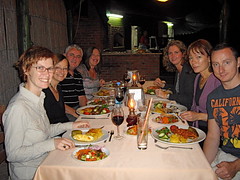
Well, Halloween is over and the Thanksgiving Holiday just can’t wait to get here. After Thanksgiving, Christmas will creep in sooner than you think and then it’s time to celebrate the New Year. With the holidays so close together, people try to look for ways to make the holiday celebrations more frugal.
How can you save on holiday celebration costs but still be able to present yummy dishes for your family to enjoy? Here are a few tips that can help you cut the total amount of your food bill for any holiday celebration.
First, you must decide how much money you’re willing to spend on each person who will be dining with you. A reasonable estimate for the meal would be to spend around $10 per person and not feel like you’re serving just coffee and cookies.
When you go to the grocery store, purchase items that are in season. If turkeys are a really good price, and you have the room to store them, get a two so you can use them over the next couple of months. Don’t be afraid to stock up on staples that you know will be used. Try your best not to buy items that will only be used on a certain holiday.
If you can, try to make as much of the food from scratch. Convenience foods like pie shells, biscuit mixes, and stuffing may save time, but they are expensive. If you are making pumpkin pie, try baking a pumpkin, and use the meat of it to make your pies. You’ll be surprised to hear your guests tell you how yummy it is.
If you have some time before hand, prepare the things in advance rather than waiting until the day of (for example; Thanksgiving Day or Christmas Day) to do so. Bake a few pies ahead of time or several dozen cookies to keep you from having to rush on the day of the feast.
If money is tight, don’t be ashamed to ask for help. There’s nothing wrong with guests bringing an item or two to share. Potluck can be fun! Just because youre hosting the party in your place does not mean that you should have to prepare everything. Put a menu together and ask people which items they are willing to bring.
You can reduce your cost by serving a vegetarian meal instead of a huge turkey to feed 20 people. You not only save money but you’ll also save time as vegetarian meals don’t take as long to cook. There’s a possibility too that you won’t have all the leftovers to store and eat over the next week.
Even though using disposable plates, napkins, and cutlery would make clean-up easier, it also makes the day more expensive. It shouldn’t take more than a dishwasher load or two to get all the dishes cleaned up. Of course, larger items like the turkey roaster will need to be washed by hands. Tablecloths, napkins, and dishtowels may all fit into one washer load.
If you choose to have a centerpiece, look for natural items that you can use to create one. Pumpkins, gourds, pinecones, pine boughs, and fall flowers can make beautiful tablescapes and they cost little to nothing.
It is possible to have a frugal holiday celebration and still have a great time. Try to remember that it is the memories we make with our loved ones that is more important.
About the Author:
Marie Ynami loves to blog about topics that interest moms. You can find more of her blog posts at Mommy Community .
Falling Income: How To Deal
June 25, 2009 | 3 Comments
Many families are in a situation where they’re dealing with job loss or reduced income due to less work.
For many, budgets are getting tighter and tighter. Even if the current economic situation hasn’t much affected you personally, you may still be taking proactive measures to be more frugal which is certainly a smart move.
You may be wondering how you can start saving some money in various ways that will allow you to free up some space in your budget.
It basically comes down to two things:
1) Make More Money
2) Spend Less Money
Everything else is just minutiae, isn’t it?
Sometimes the second thing is far easier to control. Frugality is more about what you don’t do than what you do do (you know what I mean!). When you whiz by Starbucks, when you pass the snack aisle in the grocery store, when you stay home instead of going out, you practice #2.
But let’s talk about #1 for a second.
How do you find extra money where it doesn’t exist?
Basically it just takes a good idea.
 photo credit: psyberartist
Everyone is good at something. Maybe you can make beautiful soaps. Maybe you sew. Perhaps you’re good at math and can tutor some kids. Whatever it is, start thinking of your skills.
Personally, I think every mom should have a blog.
It’s not a get rich quick kind of plan, it’s more of a long term thing, but still. It’s something that can bring in a side income and lead to other opportunities.
Just the other day I was talking with a mom who writes a fabulous blog. She works hard on it, she’s unique, she provides massive value, but she admitted that she’s not making much money.
My suggestion was for her to take some of her best posts and collect them into an ebook that she can sell. I told her the story of my first infoproduct, one that took me probably 6 hours total to finish up, but that has brought me passive income each and every month since.
Could you do that? Heck yeah.
I believe that every single one of us has a book inside of her.
There are also work from home job opportunities that require a bit of skill in some area (writing, web design, bookkeeping, graphic design, etc). I belong to a site called Hire My Mom. I wrote a review of this site here.
While it does require a small investment to access the database, it is well worth it. The posts are organized nicely and you won’t have to search painstakingly through hundreds of scammy MLMs or paid survey sites or any of that.
I posted that on my first DAY of membership, I was hired by a client who I did some work for. She was a joy to work with and it was a great experience for me.
If you’re a writer, you can find opportunities to ghostwrite. Your blog can be a sort of resume for you.
If you are letting the idea of hiring a fancy blog designer or figuring out how to “do” a blog hold you back from starting, don’t.
Reliable Webs (my web host of choice) offers free blog installations for new hosting customers.
Go here to get more information and click on “Free Blog Installations”.
Now let’s talk about #2 for a second: Saving money.
Believe it or not there are a variety of do it yourself ideas that you can easily incorporate into your life that don’t cost much at all. Here are some great ideas to try out that will help your budget and free up some money for you.
Make your Own Clothes-ish
I’ll admit, I don’t have a creative bone in my body. I can sew on a button and almost do a hem, but other than that? Meh.
If you can sew, you’re probably already doing it. But you don’t have to sew your own clothing to save money on clothes.
There are all sorts of ways to make your clothes look new and different without sewing them from scratch or buying things new.
Just the other day while shopping at a vintage clothing store in my neighborhood, I was given a free printout with instructions on how to fix a T shirt that’s too big. I could totally do this!
Repurposing stuff is especially important if you have children, who need new wardrobes nearly every year. Search books at the library and websites for creative ideas. For example, you can buy a couple cheap tank tops at a thrift store and sew a twirly fabric skirt onto them, creating low cost sun dresses for your daughters.
My 6 year old daughter inspires me because she “shops” from her younger sister’s dresser. She will put on her sister’s cardigan and make it into a shrug. She will put on a too-small tank top on top of another shirt and the effect is totally cute. (She didn’t get this creative dressing streak from me, but who cares?)
Got an old pair of jeans you don’t like anymore? You can turn them into a cute denim skirt fairly easily. Look at magazines like ReadyMade for inspiration.
If you need new clothes and you don’t know how to fit it in your budget, figure out ways to repurpose stuff you already have to save money. Or host a mom swap meet - where everyone brings stuff they don’t need anymore, and gets to shop for free! What an awesome way to keep stuff out of landfills and save money.
Grow (At Least Some) of Your Own Food
Groceries are getting more and more expensive as well. It’s hard to swallow when you go to the store and you find that simple food items have doubled in price. Growing at least some of your own food can help you to save money – even if it’s just your herbs. Planting a window box or some tomatoes in a container garden is not expensive at all. You can get seeds from a gardening friend or even plants that have already been started.
Do More Cooking Yourself
No discussion on saving money is complete without mentioning this tip. Not only should you do more of the actual cooking yourself, but think in terms of food preparation too.
Anytime your food is touched by human hands (cut carrots, sliced watermelon, etc), it’s going to cost you.
Train your kids to help you in the kitchen if you don’t want to spend your whole life cooking. Keep meals simple. I don’t know about you, but my kids don’t care if I make smoothies for lunch or prepare some elaborate meal for them. As long as their bellies are filled, they’re good.
Make Use of Used Objects
Making use of used objects in your home can save you money as well as keep stuff out of landfills. Here’s an example.
When I moved into my new house, I didn’t have a medicine cabinet to store our toothbrushes like I did in the old bathroom. At the same time, I had a cute red teapot with a missing lid. I didn’t use the teapot anymore because the steam would escape out of the hole and cool too quickly.
So I put it in the bathroom and it make a perfectly cute toothbrush holder (the toothbrushes go into the big hole, not the little one. In case you’re wonderin’).
My glass blender recently got smashed to smithereens. I’m going to locate one to replace it while I shop at thrift stores and yard sales, but in the meantime?
 This works just fine for now. (Yes, that’s an upside down Mason jar. It fits perfectly.)
The more you stretch your frugal creativity muscles, the stronger they become and the more fun you have.
Our Grandmothers drew lines on the back of their legs when they couldn’t afford stockings. We need to get a little of that attitude back!
And there are certain hidden benefits to being this cheap. I’ll give you an example. One day I was at Target and happened to find a bunch of toddler girl’s shirts on sale for $2. I bought several of them, only to find out later that these very shirts had been found to have high levels of formaldehyde in them.
Thankfully I had washed them before my daughter wore them, but still… big ick. I don’t have to worry about this when I buy clothing for her at thrift stores and yard sales.
There are other ways to come up with quick cash if you’re feeling the pinch.
1- Host a yard sale. Do it with a neighbor so it’s not so depressing, and you can attract more attention (and maybe trade some items!).
2 – Sell unneeded stuff on eBay or Craigslist.
3 – Cancel subscriptions you don’t need (magazines, cable, gym membership, etc).
4 – Call your credit card companies and ask them to reduce your interest rate. You would be surprised (as long as you have a good payment history) at how eager they may be to please you as a customer. Better yet, use the yard sale, eBay and Craigslist money to pay off your credit cards forever.
5- Figure out how to lower your monthly bills. A couple of months ago I killed my land line, and I don’t regret it in the least. I just ordered a Magic Jack and will let you know when I use it how I like it.
Sell your dryer and commit to using a clothesline or indoor drying racks (I did this several months ago, and my electrical bill is lower than anyone I know because of this one thing). Reduce your utility costs by being more aware of your usage.
Of course, it goes without saying that the very act of tracking your expenses is HUGE. I just decided to starting using a tool at PearBudget. I’ve used paper systems before and they work fine, but the advantage of an online tracking system is that it does the math for you. 
If you’ve written a post recently about your strategies to reduce your expenses, please link to it in the comments. Thanks!
Save Money While Shopping Green
April 10, 2009 | Leave a Comment
I’ve mentioned Ecobunga before on the site. I get awesome coupons for organic stuff from them all the time. Karen Schiff, the co-founder of Ecobunga, just sent me this guest post to share with you.

SAVING MONEY WHILE SHOPPING GREEN
What’s the top reason shoppers don’t buy green? (Hint: It ain’t cheap.)
That’s right. Price.
According to the 2007 GfK Roper Green Gauge® Study, about 40% of Americans say they’d pay for a product that’s better for the environment. But at the same time, 74% of those surveyed say green products are too expensive. Hopefully, supply and demand will eventually bring down the price of eco-friendly goods. But in the meantime, how can green shoppers save a buck?
Here are a few thrifty tips that can help eco-conscious consumers stretch their dollars:
How to Find Green Bargains
Sales: There are lots of green e-tailers with sales pages and seasonal promotions on their websites — everyone from big companies such as green living cataloger Gaiam to small mom-and-pop businesses.
Coupons: Unfortunately, coupons for organic foods are not nearly as common as they are for conventional grocery items. However, many organic dairy companies, such as Horizon Organic and Stonyfield Farms, do offer coupons on their websites.
Bulk Discounts: Buying in bulk is one of the easiest ways to save money. Amazon.com offers lots of super-sized green goods — everything from 10 packs of Seventh Generation paper towels to 4 packs of Ecos Laundry Detergent. Many organic meat companies offer bulk savings through their websites as well. If a large quantity order is too much for your household, find a “bulk buddy” and split the order.
Free Shipping: Free shipping deals from green e-tailers offer a great value for folks who don’t live within easy driving distance to stores with eco-friendly products. Just be sure to read the fine print — minimum purchase orders and restrictions often apply.
How to Win Green Prizes
Sweepstakes: More and more companies are sponsoring sweepstakes for eco-friendly products. We caution you to review the prize description carefully to determine whether the prize is indeed eco-friendly. If you’re not sure what makes a product green, check out Consumer Reports’ Greener Choices and Green America’s Shop & Unshop — both of these not-for-profit organizations offer helpful information.
Contests: A lot fewer people enter contests, where the winner is determined by “skill” — like the best essay, best video, etc. So your odds of winning a contest are generally a lot higher than winning a sweepstakes, where the winner is determined randomly. We have seen some great contests out there, especially for school-related prizes (like a $200,000 hybrid school bus!)
We hope these tips help you save green and win green while you go green. Good luck!
———————-
Karen Schiff is the co-founder of Ecobunga!, a free online directory listing hundreds of deals and giveaways for eco-friendly products.
To kick-start your green winnings, we invite you to enter Ecobunga’s own monthly green giveaways, too! Visit www.ecobunga.com/giveaway
photo credit: thingermejig
Cheap Eats
December 2, 2008 | 4 Comments
 What kinds of things are you doing lately to save money on groceries?
Lately I’ve tried to expand my repertoire of frugal meals for my menu planning. I’ll share some of my strategies and feel free to tell me about yours in the comments, or link to a blog post on the same topic.
Potatoes
Ya gotta love the humble potato. Interesting fact about the tuber: Did you know they came from the Andes mountains, where the natives there have eaten them for thousands of years? It was only a few hundred years ago that potatoes were embraced by Europeans, who initially thought they were only fit for the underclasses.
The potato was responsible for a population explosion in Ireland in the 1800’s, because they were cheap, easy to grow, and provided a lot of nutrition. Some people shy away from potatoes, saying they have too many carbs, but they’re good, complex carbs – the kind that boost serotonin levels and make you feel happy. (Potatoes, not Prozac)
Tonight we had a kind of potato hash that I made up on the spot. Potatoes are hard to mess up!
Carrie’s Made Up On the Spot Potato Hash
First I melted a little butter in a cast iron pan and threw in some chopped onions. Then I added some diced bacon. I let everything get soft and crispy in there for awhile.
Then I added 5 sliced potatoes. I had prebaked these, but it’s not really necessary. I just had something else in the oven and had always made it a practice to throw several potatoes in the oven whenever it’s on, because it saves energy and I can always do something with prebaked potatoes.
I let the potatoes cook until they were a bit crispy on the bottom, then flipped them over to cook on the other side. I sprinkled a little garlic salt and pepper on them. Once they were cooked, I added about a cup of grated cheese.
The kids LOVED this.
On the side we had stewed tomatoes with okra and corn. Cheap, cheap, cheap eats!
You can do a lot of things with potatoes – one of our family’s all time favorites is potato soup.
Nannie’s Famous Potato Soup
(Mom if you’re reading this I hope you don’t mind my sharing the recipe!)
Whenever our family gets together my mom always makes this potato soup and it’s always a big hit.
Basically she chops (one or a couple of potatoes per person served) potatoes into a fairly small slice/large dice and puts them in a large soup pan along with diced celery and onions and just covers them with water. These simmer until soft.
Then she adds a couple of cans of evaporated milk (when I make it, I use raw milk), and lots of salt and pepper.
It’s ultimate comfort food on a cold or rainy day. I also sometimes add a grated carrot just for a little interesting color.
Another delicious thing to do with potatoes is to make scalloped potatoes.
Scalloped Potatoes
To do this you slice potatoes thinly and put them in a large (larger than you think you’ll need, or they’ll bubble over and make a mess in the oven. Of course a sensible cook might put the casserole dish on top of a cookie sheet, but I always forget that step!) casserole dish.
Make a white sauce with butter, flour, and milk and pour on top of the taters. Lots of salt, pepper and garlic (optional). Then top with cheese. Cheddar is great, especially sharp, but last time I made this I had a little mozzarella that I didn’t want to go to waste, so I threw that on top with the Cheddar and it was out of this world. Another dish that kids really love.
Fried Potatoes
Fried potatoes are another favorite of mine. To make these you simply slice potatoes thinly (best if they’re partially baked – again to save on energy always throw potatoes into the oven when you have it on for some other reason because there are so many things you can do with them) and pan fry them in butter or oil (or both!) until as crispy as you like.
I love them made in a cast iron pan, with a little sauteed onions. My favorite breakfast is fried potatoes and scrambled eggs. When you eat those two foods in the morning, your blood sugar stays on an even keel all day and you start the day off right.
Fried potatoes are absolutely delicious with pinto beans. Cook your pinto beans with a little bacon or chicken broth to give them flavor, salt and pepper them and serve them with hot fried potatoes and you have a simple, cheap and delicious meal that is quite nutritious and very filling (all that fiber, you won’t have any trouble with constipation either!).
A side point: learn to love potato skins. I’ve never removed the skins off my potatoes so my kids are accustomed to eating the skins. Most of the nutrition is in the skin, so scrub your taters well but leave the skin on.
Also, keep your potatoes away from apples as the gas that outgasses from apples makes potatoes go bad faster. And keep them in a DARK, dry place. It’s light that causes potatoes to turn green, not time. If they do turn green, no biggie, just peel them well. Unless you’re pregnant, in which case you should probably not eat greenish potatoes.
Another thing we’re doing is eating more rice.
Rice![허기를 달래줘 [[날치알밥]].](http://farm4.static.flickr.com/3188/3046542928_ccd31fce44_m.jpg)
Rice is another staple of the cheap cook. You have to love a food that’s so nutritious, goes with anything, and cheap – you can get a huge bag of it at Whole Foods for under $20. I’m talking enough to feed a family of 6 daily for months.
Lately I find myself serving rice about once a day. I have a little red Rival rice cooker and while I’m not a big fan of appliances (the only other things that plug in in my kitchen are my blender, coffee pot and grinder), this rice cooker has been worth the counter space it takes up.
We have hot brown rice (cooked with milk instead of water) for breakfast. Add some butter and maple syrup or Sucanat to make it a little sweet, and the kids love it. If you want to get really fancy you could sprinkle a little cinnamon on it and even a bit of orange zest.
Of course, rice as a side dish is self explanatory. But to make the kids eat more of it, I cook it with a couple tablespoons of butter and a little chicken broth.
I love, love, love fried rice and have shared my recipe for that here: quick and easy simple dinner recipes. Fried rice is a great way to use up leftover bits of meat and veggies. All you need is leftover rice, an egg and other odds and ends. And soy sauce or tamari.
The other night we had Spanish rice with our beans. My Mexican friend taught me how to make it and while mine isn’t nearly as good as hers (you have to speak Spanish to the rice to make it come out perfect!), it’s delicious.
Sorta Spanish Rice
Melt half a stick of butter (yeah, baby!) in a large saute pan. Add 1 1/2 cups of white rice and stir frequently, toasting the rice in the butter until it has a nutty smell and rice turns light brown.
Add a small can of Hunt’s tomato sauce, then refill can with water and pour that in. Continue simmering until liquid is reduced to the level of the rice grains, then put a lid on the pan and turn heat down to low.
Continue cooking until all liquid is absorbed.
This stuff is SOO good! Serve it with any kind of Latin food.
I’ll share an easy sweet and sour chicken recipe too.
Easy Kid Friendly Sweet and Sour Chicken and Rice
Cook pieces of chicken in olive oil then set aside.
Mix pineapple juice (from a can of chopped pineapple), organic ketchup, a little soy sauce and a little garlic together to make a sauce. Add this to the chicken, then add veggies. Sliced red pepper, green pepper, mushrooms, water chestnuts, whatever you like or have on hand.
Cook until sauce thickens. Serve over rice. I promise your kids will love this!
Beans
No conversation about cheap eating is complete without discussing beans. I’ve been cooking a lot more beans in recent months.
Right now I’m soaking black eyed peas overnight to cook for tomorrow’s supper (along with salmon croquettes and cornbread).
I buy my beans in two pound bags instead of cans to reduce waste and save money. Once I cook the whole lot, it’s easy to freeze extra in meal size portions so you always have “easy beans”.
There’s Hoppin’ John (spicy blackeyed peas with rice) which is a complete meal. Red beans and rice (cook the rice with chicken broth and add Cajun spices to the beans). Black beans with coconut rice (cook rice with coconut milk instead of water and add a bit of cayenne to the beans), and I already mentioned fried potatoes with pintos. Another favorite meal of mine is collards and beans with corn bread.
Carrie’s Southern Collard Greens and Beans
Sometimes I make up a big pot of this and we’ll eat on it for a couple of days. I LOVE beans and greens!
To make:
I buy my collard greens in those prewashed bags when I have a coupon or they’re buy one, get one free at the grocery store. Washing greens is a huge job and requires several changes of water, then you have to cut them which is a big job. The bags are a cinch.
In a LARGE stock pot, saute some chopped onion in butter or olive oil or coconut oil. When soft, add the collard greens and then enough water to just barely cover. Cook until the texture you like. (The longer you cook them the more your body can utilize the minerals they contain.) I usually cook mine at least a half hour. Check regularly to make sure you don’t need to add more water.
Greens will “cook down” fast so don’t worry that you will have a huge pan of food. A large bag of collards, once cooked, will be enough to feed 6 people a couple of times over.
Once the greens are soft you season them as you like. I typically add a slice of all natural, unprocessed bacon to the boiling water. You can also use some homemade or canned chicken broth. At the very least, use a little garlic. Then add salt, pepper, red pepper flakes (unless you have little ones who will protest), and a little more olive oil.
And this part is very important – a splash of apple cider vinegar! The vinegar makes this dish and it also helps your body extract the calcium from the greens. I love greens served with “chow chow” which is a southern style naturally pickled relish, but if you can’t locate any, just use the vinegar.
Serve with cornbread and pinto beans. YUM!!!
Beans are a great source of protein and very filling and nutritious. I’ve never had a problem digesting beans (it’s wheat that messes me up), but one trick to reducing the gas quotient is to have a longer soaking period – two days instead of overnight, and drain the rinse water before cooking.
photo credit: busbeytheelder
So what kinds of meals are your frugal favorites?
No Spend Month, Week Three and Four
September 8, 2008 | Leave a Comment
 I’ve been a bad girl. A very, very bad girl.
Well, not so much.
I did go WAY over my $10 non essentials budget.
But I also earned far more than I spent selling off some clutter on eBay.
And I’m way behind on posting my confessions. So I’m doing two weeks at once now.
Some of the non essentials I bought actually WERE essentials. They just could’ve waited until next month.
I hit the thrift store for another .25 day. Got 3 bags full of like new kid’s clothes, books, a bag for myself, a few nice T shirts for me (including one that was 100% organic cotton – for a .25!), a pair of Converse high tops for the oldest son.
I also caved and bought that Blur Best of Blur CD. For .99 plus 2.49 shipping, I couldn’t pass it up! And it’s bringing me much pleasure. I haven’t stopped listening to it.
One of my expenditures was the cost of postage to mail books to other PaperBackSwap members. Around $9 so far. But since books are such an obsession, I’m actually saving money by doing this. Because I’ve gotten several free books this month too.
i also spend money on a couple of greeting cards. One for my nephew who recently had a huge personal success that I wanted to congratulate him on, and another for a friend who needed a pick-me-up. Combined total of around $5 but money very well spent.
Sure, I could’ve written a letter or made my own card, but I’m not crafty. And both of the cards made me laugh out loud in the store when I read them, so I’m sure they got a laugh from their recipients too.
So – bad news is I went way over my $10 budget. Good news is – I’m still under budget because I made around $90 on eBay, after fees.
What the month has taught me is that $10 a week for nonessentials really isn’t realistic for me. It may be do able for a week or two, but not for an entire month.
I also was able to recognize what my weak spots are. Books. That’s a big one. But I’m learning how to get those for almost free. Music could be, but I’ve been a real avid user of Last.fm and Pandora.com lately, so that scratches that itch.
Another trap is shopping with the kids. If I really want to save money, I need to shop when they’re not with me.
Speaking of kids, recreation is an essential expenditure. (For me as well as them.) It has to be a line item in the budget. We went out to Moe’s for a nice meal, ate outside – it was a gorgeous day. Then we spent the entire afternoon playing in the park. Frisbee, soccer, swinging – it was great. That part was free, and there are a lot of fun free things to do, but still… the meal out cost money. It was entirely worth it though.
Recap of No Spend Month:
No Spend Month, Week Two
August 22, 2008 | Leave a Comment
I started No Spent Month on August 4, so the first week went from the 4th to the 11th, and week two was from the 12th to the 18th.
I came in under budget the first week: No Spend Month, Week One so I guess it’s not too bad that I was over budget for last week. Oh, well.
I spent $10 at Ruby Tuesday when I went out with a good friend and her family. I had not seen them for a year and it was great to catch up. So this was totally worth it. I ordered salad and a water, and with tip it totaled $10.
Went to CVS because I HAD to have a pair of stockings. I didn’t have a coupon and there were no sales or anything, so I spent $4 on those. I am sure you could argue that I didn’t actually HAVE to have them, but since I wear stockings frequently to my place of worship, they’re kind of a necessity. I mean, I can go bare legged, but who wants to have to shave several times a week?
While I was there (big mistake – going into a store with the kids!) the Rug Rats talked me into buying $2 of candy.
Grand total, $16.
But to redeem myself, I got a $5.99 rebate check from a pack of pens I bought from Staples! Making the pens free but also putting that much back into my pocket making me right at budget.
This week I felt a bit more tempted to spend.
A copy of Blur’s Greatest Hits 2-CD lot on eBay caught my eye, as did several books.
But I was a good girl.
There will be plenty more people selling Blur CDs next month, (and in the meantime there is Pandora.com for free British boy bands) and I also got my book itch scratched with 4 free books from PaperbackSwap).
Whee!
If you’re joining me, how’d you do?
The Cheapest Homeschool Mom
August 21, 2008 | 3 Comments
Homeschooling has cost me very little. In fact I bet I’ve spent less to homeschool my kids than I would have if they were in public school.
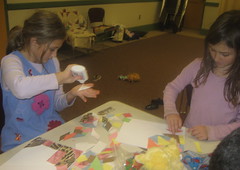
photo credit: mia3mom
Making lunch at home is cheap. I drive less because of homeschooling, saving gas money. I don’t have to buy lists of school supplies. There is no junky overpriced stuff to buy in the name of a “school fundraiser”, and no kids to schlep around town to sell said junk.
I’ll admit – when I crack open some of those homeschooling or educational supply catalogs, my mouth waters! I have intentionally stayed away from the homeschool conferences for this reason too. No reason to tempt myself with things that I probably don’t even need, or could acquire cheaply with a little creativity.
My overall philosophy on learning is that it doesn’t take money to get a good education. Forget what the politicians tell you, they’re trying to buy your vote with propaganda. Research has shown that more money thrown at the education system in this country doesn’t mean a darn thing in terms of the results. (Neither does class size, but that’s another blog post!)
Most of the well educated people we think of throughout history spent almost nothing on their education. For example, legend has it that Abraham Lincoln taught himself math with ONE piece of chalk and a slate. Great thinkers like Mark Twain learned from the people and events going on around them, not from fancy and colorful things sold in catalogs.
I have heard people say that homeschooling is expensive – not homeschoolers themselves, but people thinking about doing it.
They start pricing curriculums that cost hundreds (or more!) out of the box and wonder how they’re going to afford it – they’re also likely thinking of the cost of keeping one parent at home to oversee the child’s schooling.
The following ideas are some of the ways I’ve been able to homeschool on the cheap, and a couple of awesome book recommendations for hundreds more ideas.
Decide On Your Budget
Just like anything else that involves your finances, it’s wise to set a homeschooling budget for the year before you begin purchasing supplies. Just doing this one thing might keep you from buying a lot of unnecessary stuff that will end up in the storage closet or listed on eBay.

Know Thyself
Decide on your educational philosophy and be honest about your homeschooling style. This will rule out purchases that won’t work for your child or your family.
If possible, test-drive curriculum and other tools before you start buying. (Ask other homeschooling parents if you can peek at their stuff, or attend one of the homeschooling conferences.)
One of the reasons buying curriculum can be so expensive is because most of the time you’re buying it sight unseen. It may not be right for your child so you end up selling it at a fraction of retail on eBay.
To avoid this problem, get with the other homeschooling parents in your support group. Ask them what they like and dislike about curriculum they’ve purchased and used. Read messages on homeschooling support forums online and do the same. Deciding in advance what your style will be means you can adapt the tools to the method, not the other way around.
If you don’t want to design your own curriculum or go with an eclectic style however, curriculum in a box type programs may be cheaper than obtaining everything piecemeal. Look around at online auctions or other places where homeschoolers are selling their used stuff. You can pick up barely used supplies this way. You can also purchase inexpensive basic curriculum at bookstores for under $30 apiece. For example, the Learn at Home series are around $15, and I’ve seen them for less at warehouse stores.
Of course, the online virtual K-12 schools are a free option for a complete curriculum (I’ve also heard you can get a free computer and internet service provider as part of the deal). Some homeschoolers express concern about this because the child is technically still enrolled in the public school system, and they don’t want the intrusion into their private life. But it is an option for those who are really strapped.
Buy Used
You can find great deals at swap meets organized by homeschooling support groups. Hooking up with your local group also means group discounts on field trips. To find one, check with your local homeschool association – a simple internet search will likely turn up several in your area. In the small rural town I used to live in, there were half a dozen I could choose from! Try joining booking coops too.
Yard sales, thrift stores, eBay, Craigslist, Freecycle, “for sale or trade” message forums for homeschoolers online are some more places to find cheap supplies. Public library sales is another place to find inexpensive books to fill out your family’s bookshelves. A homeschooler’s dollars are probably best spent on a solid home library.
Be Creative
When I was a kid, every child I knew who was homeschooling did Calvert. Calvert is a wonderful classical homeschooling program but it’s also quite pricey. Nowadays, many parents are getting creative and opt to design a curriculum. I’ve done this from the start. I don’t want to get stuck in a curriculum that I don’t like or that doesn’t mesh with my child’s learning style.
There are so many options for homeschoolers. You can create unit studies, you can go for a “living books” curriculum by making lists of reading material and getting the books from the library. You can print an almost infinite number of free online worksheets (just search for what you need, for example “free third grade math worksheets” etc).
Math manipulatives can be super cheap. Instead of buying fancy manipulatives from the educational catalogs, use stuff you have around your home to teach the kids math – dried beans, dried macaroni, Lego toys, wooden blocks, measuring spoons and cups can teach addition, subtraction, multiplication, division, fractions and basic geometry.
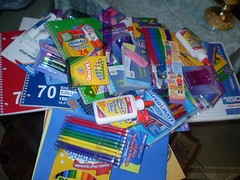
photo credit: evelynishere
Be a Freebie Seeker
Did you know that many office supply stores host teacher appreciation days once a year around August? These are a source of free and discounted items and giveaways.
This month I attended one at Staples and got a free thumb drive for my trouble. (Last year they gave away a free tote bag filled with stuff.) So far I’ve spent less than $10 and have all the paper, pens, pencils, erasers and colored pencils I’ll need for the year.
Staples, CVS, Walgreens and Office Depot have been offering FREE and for a penny school supplies for several weeks now. They’re doing these loss leaders to get people in the store and it’s a goldmine for us homeschoolers.
Many larger bookstores such as Barnes and Noble also offer discounts to teachers throughout the year, including homeschooling parents. You just ask customer service for a discount card. They’ll put you on their email list and invite you to special educator days throughout the year with awesome speakers, giveaways, freebies, even free coffee and refreshments from the Cafe!
I got to meet Ron Clark, an award winning educator and author of The Essential 55 at one of these events. He signed my book for me then when he found out I was a homeschool mom, got out of his chair and bowed to me. LOL! Barnes and Noble also gives away free books in the summer.
Public libraries are a neverending source of free homeschooling materials. From the obvious – unlimited free books – to educational DVDs, great music on CD, music instruction on DVD and CD, arts and crafts activities open to the public, symphony days, storytime, even continuing education for older teens and adults.
These are the things I’ve always done to save money, but lately I’ve read a couple of awesome books that have given me tons more ideas.
Homeschooling on a Shoestring
This book was written by two homeschool moms whose families couldn’t have been more different. The thing they had in common was an intense love of homeschooling and their kids, and a desire not to let small budgets stop them.
What was interesting about this book is that it spends the first few chapters talking not about homeschooling per se, but about making more room in the budget, period. From saving money on groceries and other budget line items to launching home based businesses, it encourages making wiggle room in the family finances, which is helpful information all by itself.
Then the latter chapters focus on specific ways to educate kids for pennies. It covers everything from the basics of designing curriculum cheaply to enrichment activities like the arts, musical training and sports. It also spends a few chapters on teens and college bound homeschool kids.
The sections on teaching math using everyday items and also the information on teaching a second language were especially useful for me.
This book was written in the 90’s so the information on using computers and the Internet are a bit outdated but overall the book is chock full of useful tips and ideas.
One great idea I got from this book is to think more about bartering. I want my kids to have piano lessons but it’s not in the budget at this time. So, I’m looking around for a local piano teacher who needs a website and offer to build her one in exchange for a few lessons for the kids for me.
Ditto with Spanish “class”. I want to learn Spanish and I want the kids to learn too. I have a few Spanish speaking friends who are not teachers or tutors and have offered to barter or pay them a small fee for weekly lessons. Still working out the details on that. The ideas in this book have really stimulated my creativity.
Homeschool Your Child for Free
This hefty volume, also written by two homeschooling moms, is another awesome resource. Because it was published in 2000, it has many online tools and websites listed in its pages.
This book claims to have 1,200 resources listed for home educators, and I believe it. While the first book deals mostly in principles, this book has more specific recommendations.
It’s organized into the following sections: Curriculum Scope and Sequence; Education Essentials; Language; Mathematics; Art; History; Music; Social Studies; Humanities; Science; Health and then finally Graduation. This makes it easy to find the specific information you’re looking for.
Homeschool Your Child For Free would be a wonderful addition to any homeschooling parent’s library, a reference to pull off the shelf whenever you’re scratching your head wondering where you can find free information for your child on any particular topic.
For more homeschooling ideas, don’t forget to sign up for the free homeschool tips list!
No Spend Month, Week One
August 11, 2008 | 4 Comments


Well, I did really well on the first week of my No Spend Month. I technically started on Monday the 4th, not the first of the month.
Here is what my spending looked like:
$2.50 at Staples for school supplies. I simply couldn’t pass this one up! I got 20 free file folders, spiral bound notebooks for .05 apiece, and ten-pack bags of pencils and pens for .50 apiece. These will last me for a year so I don’t mind this purchase at all.
$0.95 for a library late fee (Ack! I call this Stupid Tax!) Don’t you just love the public library? It’s a frugal mom’s dream. I took the kids to the library Wednesday and we got a couple dozen books, and the movie Girl of the Limberlost (the Lactivist is always talking about the book, so when I spotted the movie I grabbed it. Haven’t watched it yet).
$1.98 at Starbucks.
Sunday I went out with a girlfriend for some grown up time. We were going to do something cheap (I told her about my No Spend Month), just the two of us, but at the last second she called me saying her brother was in town from another state, and she and her hubs wanted to take him out to dinner, and would I meet them at a local restaurant ($20 a plate! Gulp!). She said she would understand if I didn’t come.
I told her she was worth it, so we went out. And at the end, her very hot and very sweet but unfortunately married brother picked up the check. Was that cool or what? It prevented me from going over budget!
So my grand total was less than $5 which puts me under budget! Yea!
And just today I discovered that Crunchy Chicken hosts an ongoing Buy Nothing Challenge so I am putting her button here:
So congratulate me already! I put an extra $100 in the savings account above and beyond the usual auto deposit that goes in every month.
My Challenge: Spend Nothing August
August 3, 2008 | 11 Comments
I found another blog I enjoy and her recent challenge to spend nothing in July got me thinking.
Of course, unless you own a farm and don’t use fuel, it’s probably impossible to spend nothing… but the point is to spend as little as possible and really question all your spending for a time.
I’m going to do this in August.
I have an important goal for October, and this will help me get there a little more easily.
I have set a goal of moving out October 1st.
For those of you who don’t know, I’ve been living in my parent’s home since December 2006. It’s been a blessing to be able to stay here for more than one reason, the least of which is being able to save money, build my business and meet some financial goals (like getting out of debt. Woohoo!).
But it’s time to move.
You know that old saying about leaving the party while you’re still amusing?
My parents say they like having us here and feel safer with us nearby, but they’re just being nice. They deserve to have more peace and quiet, their own routine and alone time (no matter what my mom’s comment says below. lol!)
So No Spend August will help me meet some goals. For one, I have my security deposit and first month’s rent set aside in savings, but I also want to have an emergency fund. My emergency fund got eaten up a couple of months ago when I dropped a grand on car repairs.
The awesome back to school sales going on right now will tempt me! And in fact I may take advantage of all the .01, .05 and .09 deals I’ve seen at the drug stores, office supply stores and etc.
I’ve set a budget for $10 a week.
Outside of food, petrol and bills (like business expenses), I can only spend $10 a week.
The kids don’t need any new clothes or shoes.
I don’t need any new clothes or shoes.
I don’t need any new household items until I move.
I can (gulp!) live without Starbucks for a month.
I can do free entertainment. Helloooo library books and DVDs!

Want to join me?
Natural Product Bargains Can Be Found
July 11, 2008 | 2 Comments
Every once in awhile a reader emails me to ask how to find bargains on natural products. The sometimes frustrating thing about using non toxic skin care and other products is that they’re more costly.
True enough.
Good stuff does cost more. But, if you’re a savvy shopper and willing to do a little digging, you can find bargains on natural products. Here are some tips on how to do that.
- Be alert to clearance bargains. In just the last week I’ve snagged some great deals on a couple of natural beauty products at my local Publix grocery store. Not exactly a health food co-op, it’s the closest grocery store to me (a 4 minute drive) so it’s the place where I do the bulk of my shopping. They always have a few shopping carts full of clearance items and I always check it out.
A couple of recent finds: Burt’s Bees Pomegranate Shampoo and Conditioner for $3 each (retails around $8 each). I bought several of these! I found Burt’s Bees lip gloss for $2 too.
Another find: California Baby Diaper Rash Cream for $3 each (normally retail at around $10). I don’t have a baby in diapers, so I plan on giving these away here sometime soon.
I’ve also snagged some Burt’s Bees lotions on clearance at CVS. There are always products being discontinued and such and since a lot of the more natural products don’t sell as well at larger drugstore chains, you can find them marked down occasionally.
- Check company websites. I am frequently able to print off valuable coupons for products I use regularly or want to try, just by visiting the company’s website. Sometimes you have to sign up for their newsletter, but that’s ok because then you’ll get more coupons straight to your inbox.
Ditto for grocery store websites. Again, Publix sends me their print magazine in the mail and today I got about 20 $1 off coupons for natural/organic items, including one for the Clorox GreenWorks line which I really like. So before you buy a product, take a minute to check out the website and see if they’re offering any coupons.
- Visit frugal/coupon/freebie websites. There are quite a few blogs I visit regularly to check out the freebie and coupon postings. Just to name a couple that have give me valuable info recently: Money Saving Mom, BeCentsAble and Freebies4Mom
I have these 3 on my RSS reader and check them daily. They all turn up some great deals, including this one: Walgreens Saturday event with Yes to Carrots coupons and freebies. It just so happens that I will be passing by Walgreens Saturday on my way to another errand so I am absolutely going to drop in and grab a free Yes to Carrots Lip Butter!
It was one of these sites that alerted me to free coupon booklets for organic products that were distributed several weeks ago in grocery stores and health food stores. I’m still using these up, and most of them for $1 off various organic food items.
- Check here. I post discount codes for online retailers like Amazon and other sites as often as I get wind of them. It seems that about once a month Amazon has a percentage off sale on organic and natural product lines.
Make sure you’re signed up for my newsletter because I send them out there too (enter your name and email in the box on the upper right hand corner of the site). I also get discount codes periodically from some of my guests who have ecommerce sites. In a few weeks I’m featuring a company that sells frozen organic baby food (they ship!) and they’re offering a freebie, so stay tuned for that.
- Contests and giveaways. Winning free stuff is cheap. You can sign up for newsletters like Ecobunga to get wind of the best giveaways and contests for natural and organic products all over the web.
So those are a few of my strategies. Of course, some of the best ways to save money are to minimize the number of products you use in the first place and make your own stuff as much as you can.
What are some of the ways you save money on natural/organic skin care and other products?